Shoe Box Dimensions: Standard Sizes for Men’s, Women’s and Kids’ Shoes
Shoe box dimensions depend on the type of shoe. Men’s boxes are the largest of the everyday sizes, women’s boxes are slightly smaller, kids’ boxes are much smaller, and boot boxes are taller and longer to fit the shaft. The quick reference table below gives typical size ranges for each shoe type, in both inches and centimeters.
We make around 100,000 shoe boxes a day for footwear brands, most of them in Wenzhou, one of China’s main shoe-making centers. The size ranges below are typical for the market; your own boxes will be sized around your lasts. The second half of this guide is for brands ordering custom shoe boxes: how to size a box range, which style and board to choose, and how the boxes ship.
Shoe Box Size Chart
The table lists typical outside dimensions (length × width × height) by shoe type. Outside size is what matters for shelf space, cartons and shipping. Treat these as starting ranges, not fixed standards: the exact size depends on your shoe and how it is packed.
| Shoe type | Size (inches) | Size (cm) | Usual style |
|---|---|---|---|
| Men’s sneakers / casual | 13–14 × 7.5–9 × 4.5–5 | 33–36 × 19–23 × 11–13 | Lid and base |
| Men’s dress shoes | 12.5–13.5 × 7–8 × 4.5–5 | 32–34 × 18–20 × 11–13 | Lid and base or drawer |
| Women’s flats / sneakers | 11.5–12.5 × 6.5–7.5 × 4–4.5 | 29–32 × 17–19 × 10–11 | Lid and base |
| Women’s heels | 11.5–13 × 7–8 × 4.5–5.5 | 29–33 × 18–20 × 11–14 | Lid and base or drawer |
| Kids’ shoes | 8.5–11 × 5.5–7 × 3–4 | 22–28 × 14–18 × 8–10 | Lid and base or folding |
| Ankle boots | 13–14 × 9–11 × 5–6 | 33–36 × 23–28 × 13–15 | Lid and base |
| Tall boots | 18–22 × 10–13 × 4.5–6 | 46–56 × 25–33 × 11–15 | Lid and base, often corrugated |
Sizes are outside dimensions, rounded. Tall boots are usually packed lying down, toe to heel, so the box is long rather than tall.
Standard Shoe Box Sizes by Shoe Type
There is no single official standard size for a shoe box. Each brand sets its own sizes around its lasts, and the same shoe size can need different boxes from one brand to the next. What the industry does share is a set of size bands by shoe type.
Men’s shoe boxes
Men’s boxes need the most length and width, and dress shoes need extra height at the heel. A typical men’s box runs about 13–14 inches (33–36 cm) long; chunky sneakers and large sizes push the width toward 9 inches (23 cm).
Women’s shoe boxes
Women’s boxes are usually narrower than men’s. Heels need more height than flats, so many brands run two box heights in one women’s line. Most women’s boxes fall around 11.5–13 inches (29–33 cm) long and 6.5–8 inches (17–20 cm) wide.
Kids’ shoe boxes
Kids’ boxes are the smallest and are often made with lighter board, since the shoes weigh little. Kids’ boxes usually range from about 8.5 to 11 inches (22–28 cm) long, depending on age group.
Boot boxes
Boot boxes are the largest in a footwear range. Ankle boots fit a deep version of a standard box, while tall boots usually need a longer box with the boots laid toe to heel. Ankle boot boxes are around 13–14 inches (33–36 cm) long and 5–6 inches (13–15 cm) tall; tall boot boxes often reach 18–22 inches (46–56 cm) long.
Measure the pair the way it will actually be packed, with tissue paper, shoe trees or stuffing in place. A box sized to bare shoes is often too tight once the packing material goes in.
How to Choose the Right Box Size for Your Shoes
The right shoe box size is the packed size of your largest shoe in a size band, plus a small clearance on each side. Most brands do not make one box per shoe size. They group sizes into a few bands and make one box for each band.
- 01Measure the largest size in each bandMeasure the pair as packed: length heel to toe, width across both shoes side by side, and height at the tallest point.
- 02Add clearanceLeave room on each side so the shoes go in and out easily. A common starting point is about 5–10 mm (1/4–3/8 inch) in length and width, and a little more in height if tissue or stuffing goes on top.
- 03Group sizes into bandsMany lines use three or four box sizes per gender, with two or three neighboring shoe sizes sharing each box.
- 04Check the cartonBefore you fix the sizes, check how many boxes fit in a standard shipping carton.
One design can be produced in several box sizes. We make custom shoe boxes in any size, so the artwork can be scaled across all the sizes in your range and printed in one production run.
Send the factory one physical pair from the largest size in each band. A real shoe in the hand settles fit questions that drawings and measurements leave open.
Shoe Box Styles: Lid and Base, Drawer and Folding
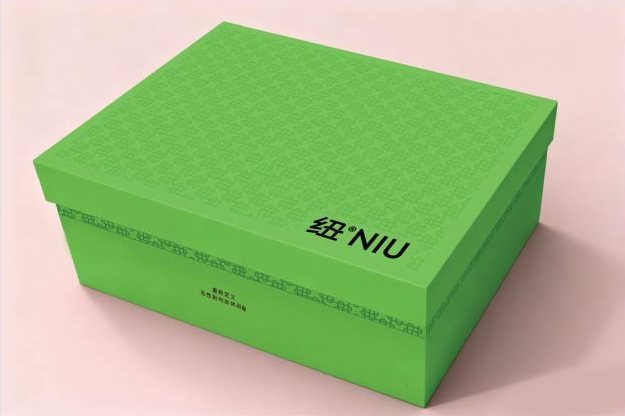
The three common shoe box styles are the two-piece lid and base box, the drawer box with a sliding tray, and the folding box that ships flat. We make all three. The choice usually comes down to the price point of the shoe and how much freight and storage space matters.
| Style | How it works | Best for |
|---|---|---|
| Lid and base | A separate lid fits over the base; the classic shoe box | Most footwear, from everyday to premium |
| Drawer box | A tray slides out of a printed sleeve | Premium sneakers and gift editions |
| Folding box | Ships flat and folds into shape when packed | High volumes where freight and storage cost matter |
Board and Strength
Shoe boxes are made from greyboard, white paperboard or corrugated board, depending on weight and price. Greyboard boxes are wrapped in printed paper and feel solid, which suits premium shoes and boots. White paperboard is printed directly and keeps the cost down for everyday lines.
Corrugated board is the strongest of the three and holds up best in shipping and stacking, so it suits heavy boots and boxes that ship directly to consumers. All three can be printed in full color and laminated. See our custom shoe boxes page for the full options.
Made Where the Shoes Are Made
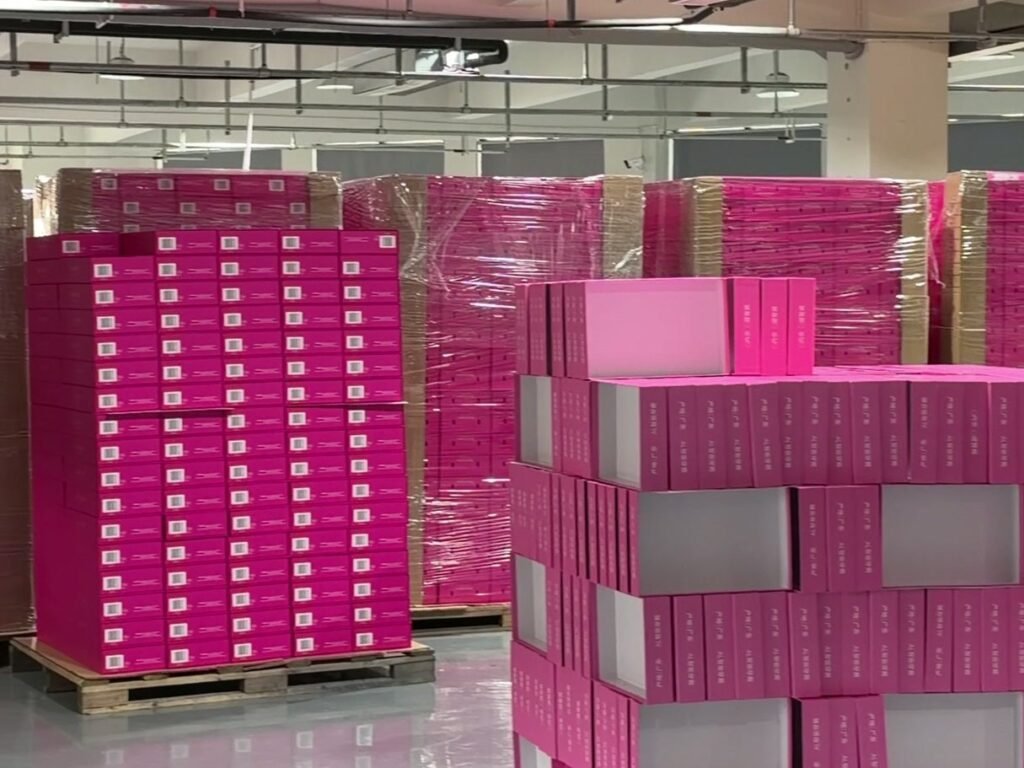
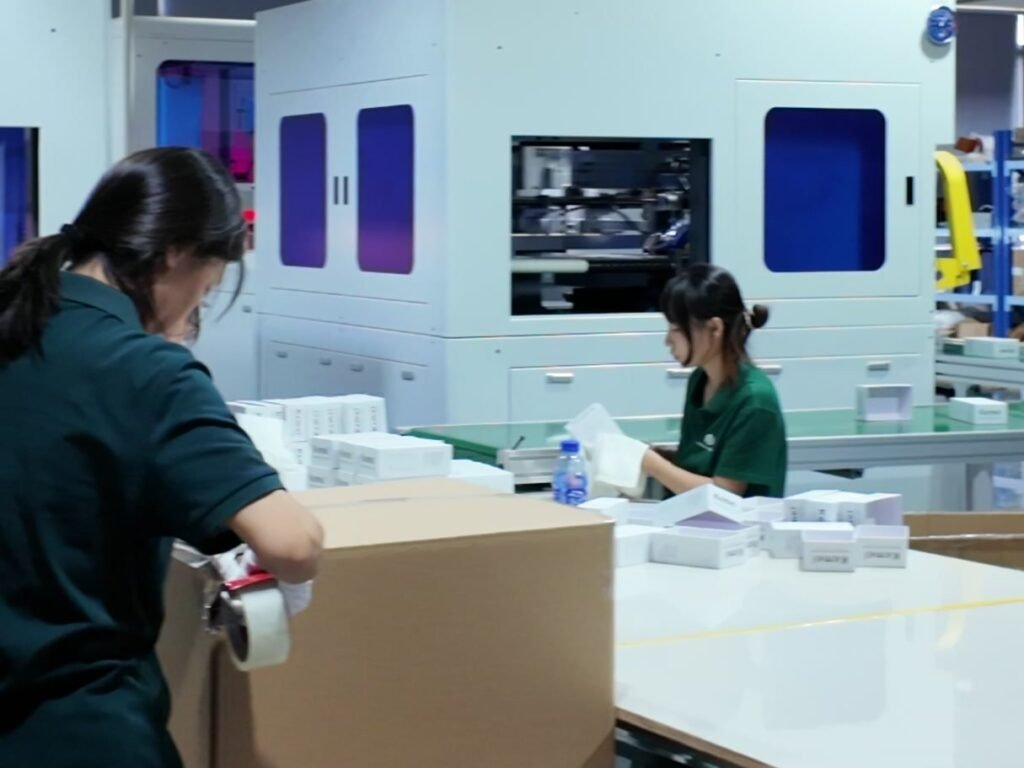
Our factory is in Lucheng District, Wenzhou, an area where many of China’s shoe makers are based. Working next to the shoe factories we supply keeps delivery short and makes it easy for brands to check boxes and shoes together. Shoe boxes are our biggest product line, at around 100,000 a day out of about 150,000 boxes in total.
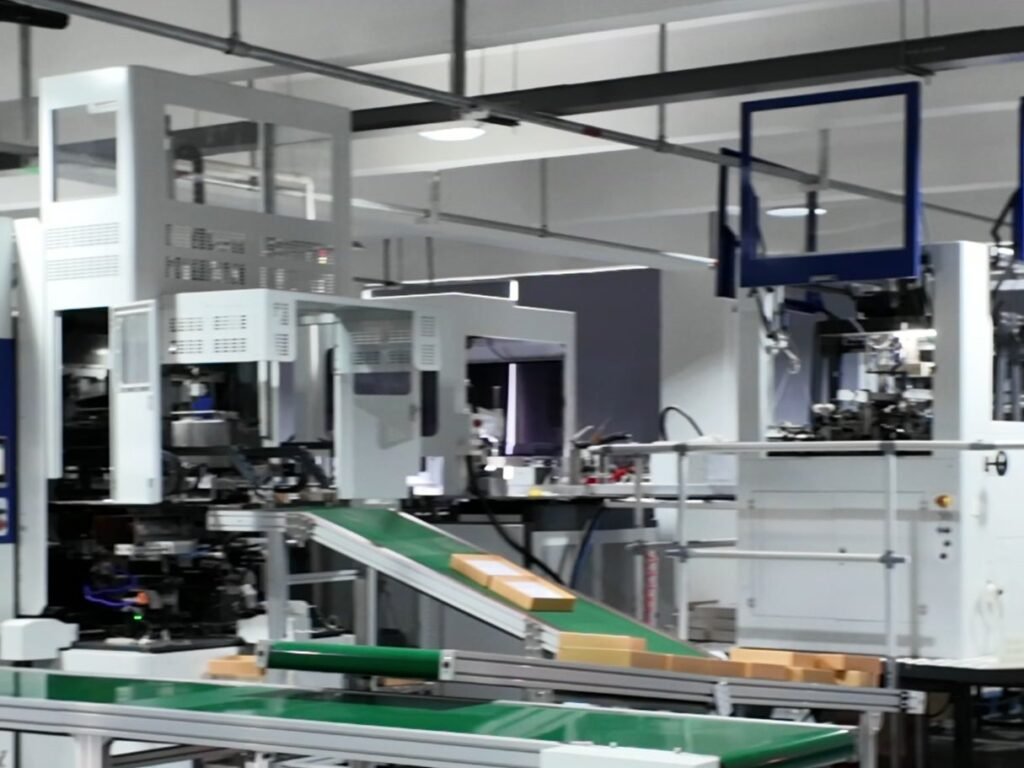
Our MOQ for custom shoe boxes is 3,000 pcs. A digital proof sample takes about 7 days, and bulk production about 15 days after sample approval.
Shipping Cartons for Shoe Boxes
Shoe boxes travel in corrugated shipping cartons, and the carton size should be planned together with the box size. The inside of the carton is the box’s outside size multiplied by the number of boxes in each direction, plus a small allowance so the boxes go in without crushing. We make our own corrugated cartons, so they are sized to your boxes and shipped with them.
If you sell online, check whether the shoe box itself will be the shipping box. If it will, choose corrugated board, because a printed greyboard box is not built for parcel networks.
FAQ
What is the standard size of a shoe box?
There is no single official size. Each brand sizes boxes around its own shoes. Typical size ranges are listed in the chart at the top of this page, grouped by men’s, women’s, kids’ shoes and boots.
What size box will fit a shoe box?
To ship one shoe box, use a shipping box slightly larger than its outside dimensions on every side, with room for padding. To ship several, multiply the shoe box’s outside size by the number of boxes in each direction and add a small allowance.
What are the dimensions of a USPS shoe box?
The USPS Priority Mail Shoe Box measures 14-7/8 × 5-1/4 × 7-3/8 inches on the outside, according to the USPS store. It is a shipping box supplied by USPS, not a retail shoe box.
Need shoe boxes for a full size range? Send your shoe sizes, quantity and artwork, and we will propose box sizes and quote. See our shoe box options or request a quote.