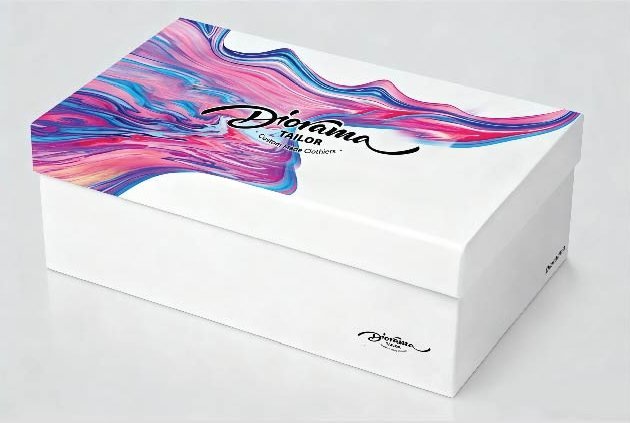

Rigid Box vs Folding Carton: How to Choose for Your Product
A rigid box is built from thick greyboard wrapped in printed paper and arrives already formed. A folding carton is cut from a single sheet of thinner paperboard and ships flat until you fold it. Choose a rigid box when the unboxing has to feel premium and the box will be kept. Choose a folding carton when unit cost, freight and storage space matter more.
We make both styles in the same factory in Wenzhou, China, so this guide compares them from the production floor: what each box is made of, which steps add cost, and how to decide for your product. Where a number depends on your size and artwork, we say so instead of guessing.

What Is a Rigid Box?
A rigid box is a box made from solid greyboard, usually 1.5–4 mm thick, that is wrapped in printed or specialty paper and keeps its shape on its own. In our factory, 2 mm greyboard is the most common choice. The wrap can be coated paper, specialty art paper or kraft paper, and the surface can be laminated, foil stamped, embossed or spot UV coated.
Because the walls do not flex, a rigid box feels heavy and solid in the hand. That is why brands use it for gift sets, cosmetics, electronics, spirits and tea. The common structures are a two-piece lid and base box, a book-style magnetic closure box and a drawer box with a sliding tray.

What Is a Folding Carton?
A folding carton is a box die-cut and creased from one sheet of paperboard, shipped flat, and folded into shape when the product is packed. It is the box you see on most supermarket shelves: cereal, toothpaste, tea bags and cosmetics refills. The board is much thinner than greyboard, so the carton is light and cheap to ship.
We make tuck end cartons, crash-lock bottom cartons and folding gift boxes with a die-cut handle. Folding cartons have been the backbone of retail packaging since the late 19th century, and the format has changed little because it works. Most folding cartons use white card (C1S), grey-back duplex board or kraft board, usually 250–400 gsm, chosen by the weight of the product.

Rigid Box vs Folding Carton at a Glance
The main difference is the board: rigid boxes use thick greyboard formed into a fixed shape, while folding cartons use thin paperboard that folds flat. Almost every other difference in cost, lead time and freight follows from that one choice.
| Point | Rigid box | Folding carton |
|---|---|---|
| Main material | Greyboard 1.5–4 mm, wrapped in printed paper | Single-layer paperboard, printed directly |
| How it arrives | Fully formed (or flat, if collapsible) | Flat, folded by you when packing |
| Feel when opened | Heavy, solid, kept after use | Light, usually thrown away |
| Unit price | Higher | Lower, often a fraction of a rigid box |
| Our MOQ | 1,000 pcs | 1,000 pcs |
| Sample time | About 7 days (digital proof) | About 7 days (digital proof) |
| Bulk lead time | About 15 days after sample approval (18 in peak season) | About 15 days after sample approval (18 in peak season) |
| Freight volume | Ships at full size | Ships flat |
| Typical products | Gift sets, spirits, tea, cosmetics, electronics, shoes | Food, retail refills, everyday wine, light goods |
If you are torn between the two, order one digital proof of each at the same size. Our sample fee is refunded when you place the bulk order, so testing both costs you about a week, not a second budget.
How Each Box Is Made in Our Factory
A rigid box takes more steps than a folding carton, and each extra step is a reason it costs more and takes longer. Both boxes start the same way. The artwork is printed on one of our three four-color offset presses, then laminated with gloss, matte or soft-touch film.
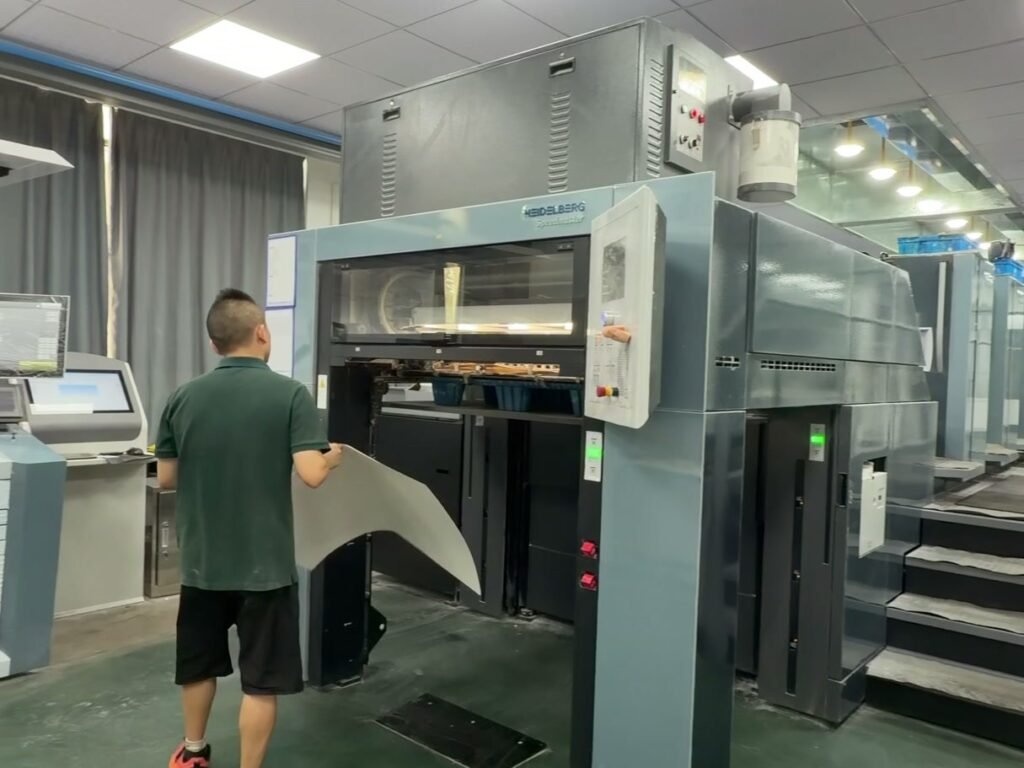
After lamination the two paths split. A folding carton is die-cut and creased straight from the printed sheet, and the job is close to finished. Most folding cartons ship flat. Tuck-end and snap-lock cartons are normally glued along the side seam so they open in one move when you pack; flat, unglued sheets are also an option.
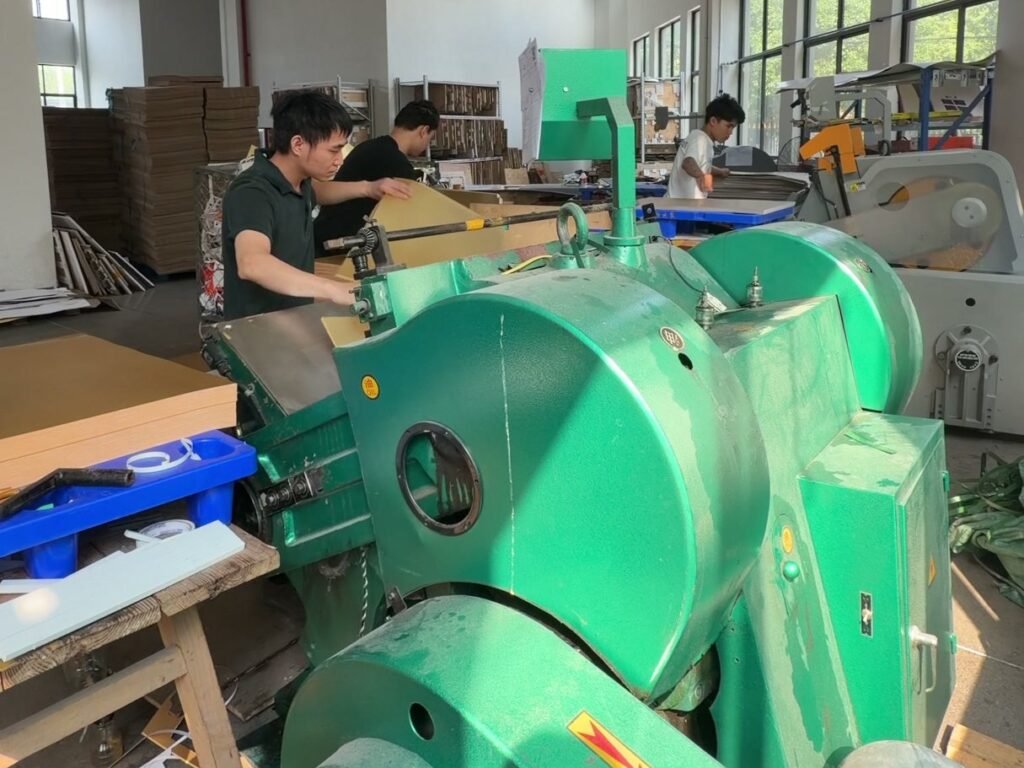
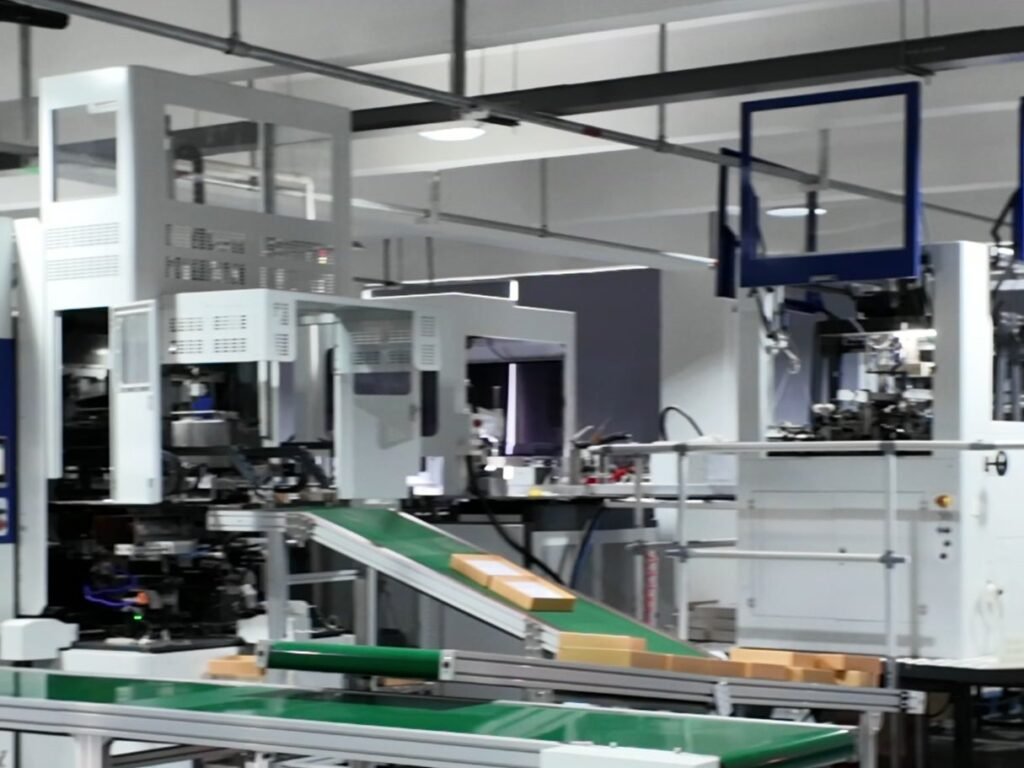
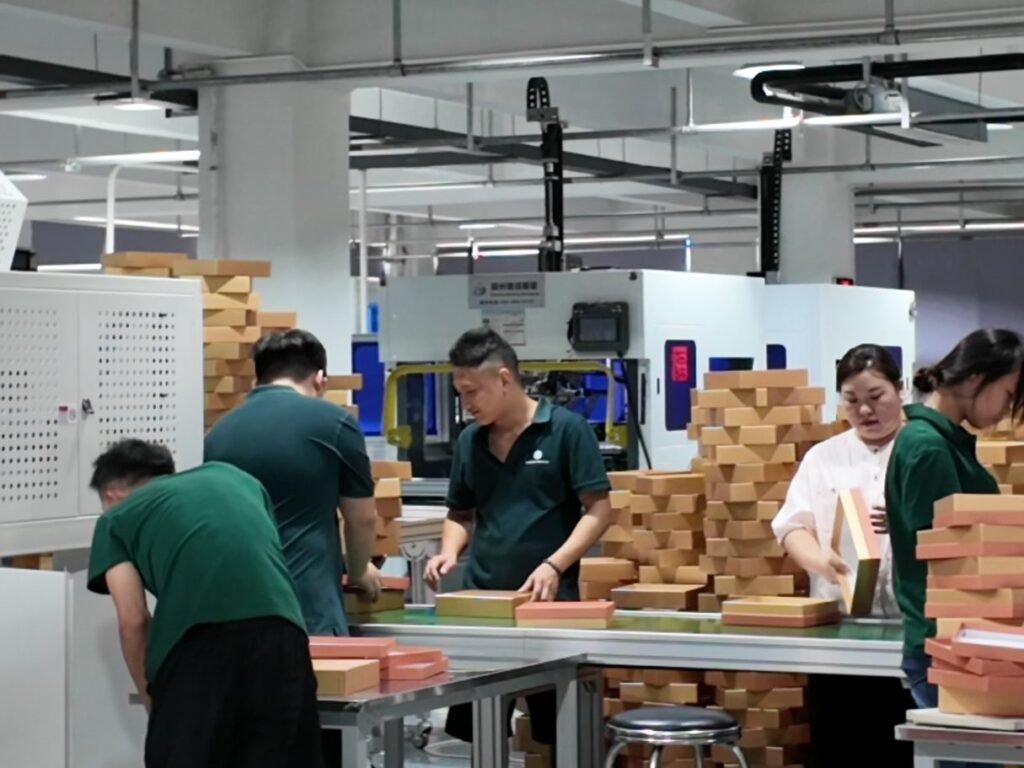
A rigid box needs a second set of parts. The greyboard is cut to size, the printed wrap is glued around it on our automatic forming lines, and the corners are pressed tight. Inserts, ribbons, magnets or handles are added by hand at the end. We run 12 automatic forming lines, but the hand finishing is still where most of the labor goes.
Why a Rigid Box Costs More
A rigid box costs more because it uses more material and more labor per unit. The greyboard alone is several times thicker than carton board. On top of that, each box has two printed parts (the wrap and often a liner), an extra gluing and forming step, and hand work for inserts and closures.
The gap is not fixed. It narrows when the folding carton needs heavy finishes, such as foil, embossing and spot UV on every face. It widens when the rigid box adds a magnet, a ribbon pull or a custom EVA insert. For a true comparison, ask for both quotes with the same size, quantity and finishes. As a rough guide, published price ranges put folding cartons at a few cents to about $1 per unit in volume, while rigid boxes usually start around $1 and go up from there, so a rigid box often costs several times as much.
Ask for quotes at two quantities, for example 1,000 and 5,000 pcs. Rigid box setup costs are spread over the run, so the price per box often drops more steeply than buyers expect.
Shipping and Storage
A rigid box ships at its full size, so you pay to move and store a lot of air. A folding carton ships flat, and a single export carton holds far more of them. For a large order shipped by sea from China, the freight difference can be close to the box price difference.
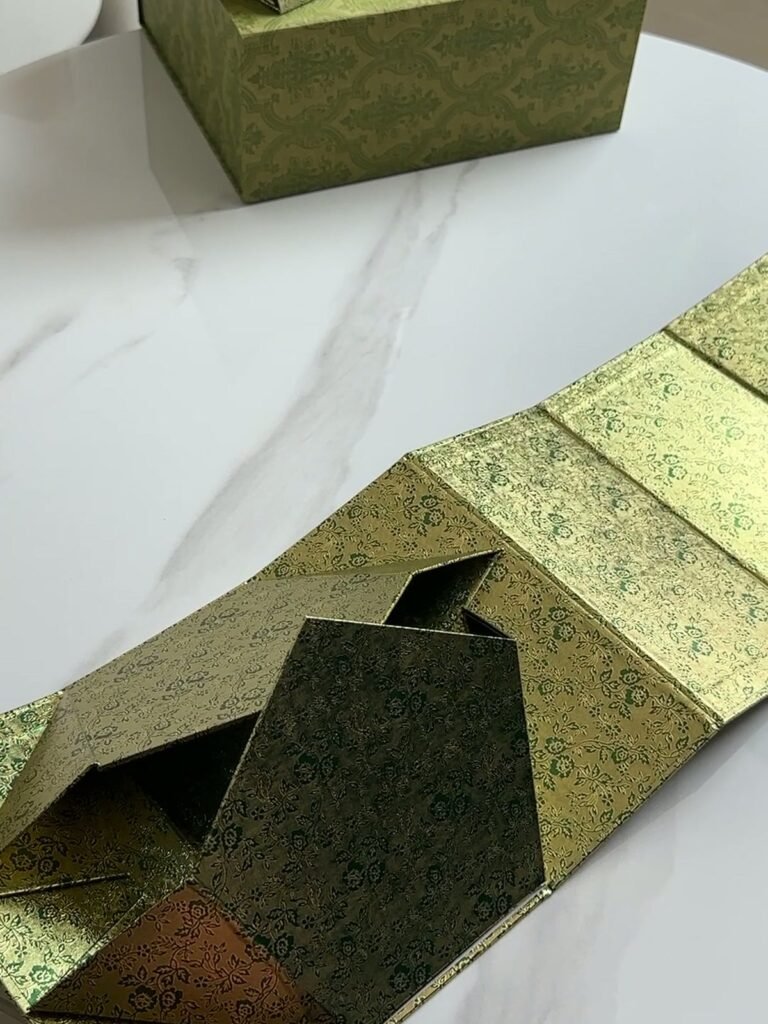
There is a middle option. A collapsible rigid box uses the same greyboard and wrap papers as a standard rigid box, but folds flat for shipping and opens into shape in a few seconds. In our experience it usually cuts the shipping cost of the boxes by half or more compared with the same box shipped assembled.
Which One Fits Your Product?
Pick the box by what the customer does with it after opening. If the box is part of the gift, or the product sells for a price where presentation drives the sale, a rigid box earns its cost. If the box is opened once and recycled, a folding carton is the sensible choice.
| Product | Usual choice | Why |
|---|---|---|
| Cosmetics and skincare sets | Rigid box (sets) / folding carton (single items) | Gift sets are kept; single refills are not |
| Electronics and accessories | Rigid box | Protects the product and supports a premium price |
| Shoes | Rigid lid and base, or folding | Depends on the price point and on shipping volume |
| Spirits and wine gift editions | Rigid or magnetic closure box | The bottle needs a fitted insert and a solid shell |
| Tea and food gifts | Rigid box with handle | Seasonal gifts are carried and shown, not just stored |
| Everyday food and retail goods | Folding carton | Lowest cost per unit and easy to pack at speed |
Shoes are a good example of how the choice really works. We make around 100,000 shoe boxes a day, and our customers use rigid lid and base boxes, drawer boxes and folding boxes for different lines. See our custom shoe boxes page for the options.
A folding carton can still look premium. Soft-touch lamination plus foil on the logo only, rather than all over, gives a high-end feel at a fraction of the cost of a rigid box.
What About Corrugated Boxes?
A corrugated box is made from fluted board and is designed to protect goods in transit, not to present them. It is the brown outer carton your rigid boxes or folding cartons are packed into, and the mailer box used by many online shops. We make our own corrugated shipping cartons, so the outer cartons can be sized to your boxes and shipped with the order.

FAQ
What is the difference between a rigid box and a corrugated box?
A rigid box is made from solid greyboard wrapped in printed paper and is designed for presentation. A corrugated box is made from fluted board and is designed to protect goods in shipping. Rigid boxes are often packed inside a corrugated carton for export.
What are rigid boxes used for?
Rigid boxes are used where presentation matters and the box may be kept: gift sets, cosmetics, electronics, spirits, tea, jewelry and premium shoes. They hold their shape without the product inside and can take inserts, magnets and handles.
What are the different types of carton boxes?
The common folding carton styles are tuck end boxes, crash-lock or auto-lock bottom boxes, sleeves, and folding boxes with a built-in handle. The style is chosen by product weight, how fast the box needs to be packed and how it will be displayed.
Can a folding carton feel premium?
Yes. Good print, soft-touch or matte lamination, and selective foil or embossing can make a folding carton feel high-end. It will never feel as heavy as a rigid box, but for many products it is the better value.
Not sure which box suits your product? Send us the product size, quantity and a photo of a box you like. We will suggest a style and quote both options if it helps you decide. Request a quote.